
FRYTAG in Practice:
University & Industry
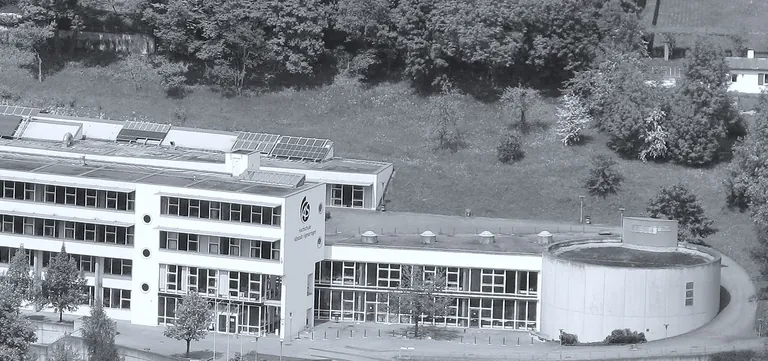
We at FRYTAG.AI have built the FRYTAG core engine — the Learning Code Knowledge Graph — and continuously improve it: developed and scientifically evaluated in close collaboration with Hochschule Albstadt-Sigmaringen in Germany, validated with industry partners under ZIM funding, and now in continuous dogfooding on real repositories.
Three partners, one mission
FRYTAG.AI
25 years of enterprise legacy modernization as a company. Creator and methodologist of the FRYTAG Toolchain — the core engine is built and continuously dogfooded on real repositories.
Hochschule Albstadt-Sigmaringen
Applied sciences university focusing on AI methods and Large Language Models in software engineering. Scientific evaluation and quality criteria development.
Manufacturing Enterprise
Large-scale production company with Java/JEE legacy systems. Provides the real production environment for pilot validation and direct benefit.
Five phases, one workflow
Each phase of FRYTAG is validated under real industrial conditions, with insights feeding directly back into toolchain improvement.
Identify
AI-powered analysis of legacy codebases to identify natural module boundaries and prioritize modernization candidates.
Reverse-Engineer
Automatic derivation of functional specifications from legacy code and system observation — producing stakeholder-ready documentation.
Cover
AI-based automated test generation from the approved specification, integrating existing legacy tests to build a full coverage baseline.
Isolate
AI agent-driven refactoring and module isolation, working test-driven against the generated suite, detecting and correcting regressions autonomously.
AI Development & Validation
Integration of FRYTAG into the SpecKit development workflow, measuring productivity gains, quality improvements, and practical applicability.
The feedback loop that makes FRYTAG better
Research results are tested directly with industry partners. We hope to ever improve the value proposition and use of FRYTAG with our clients, strengthen our team, and align our mission with what customers truly need.
- Real production systems validate every FRYTAG phase under industrial conditions
- Research findings from the university feed toolchain improvements
- Industry partner results directly shape the product roadmap
- Customer feedback continuously aligns the mission with market needs
- Team grows through collaboration and hands-on legacy modernization

From prototype to production.
FRYTAG is not just a toolchain — it's a living methodology, continuously sharpened by academic rigor and real-world enterprise challenges. Join us on this journey.